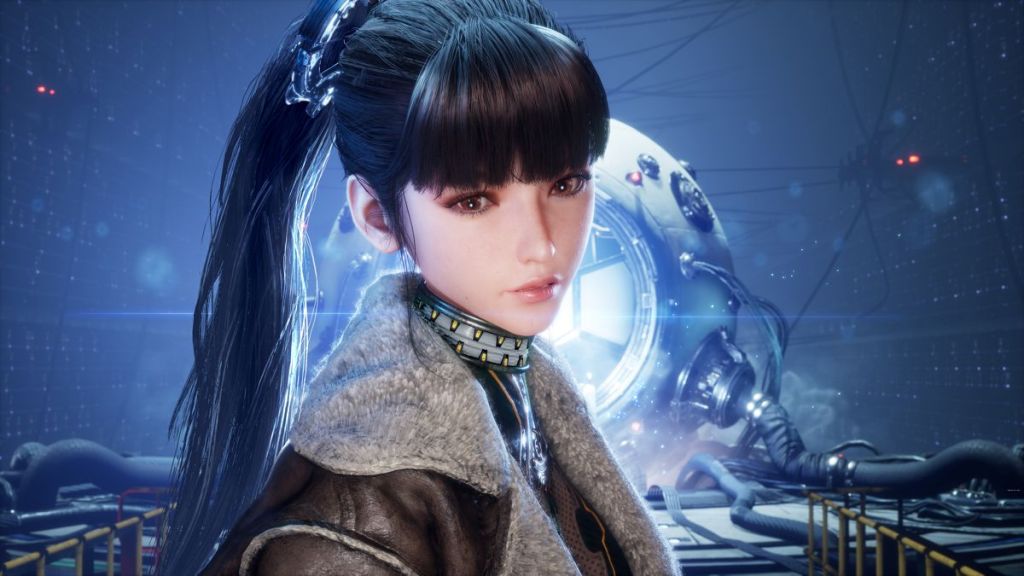
As a fan of its distinctly PS2 era vibes and all the games from which it draws its obvious inspiration—Nier Automata, Bayonetta, Sekiro—I could not have been more excited for Stellar Blade. I had been wearily eying all the pre-release fussing over its provocative, hyper-sexualised protagonist (Eve), but I was expecting to roll my eyes and shake my head, just a little bit, then brush it off and crack on with enjoying the game. I was pleased when my early impression was that it felt great to play and seemed mostly harmless (if a little silly and immature) and I was excitedly preparing to start writing a positive review and to proudly deploy the headline: Stellar Blade, or: How I Learned to Stop Worrying and Love the Bum, even if I was unsure how a Dr. Strangelove reference might land in 2024.
Sure, the main character looks like she’s wandered in after a night out with Skyrim’s Nexus Mods “most endorsed” list, but there’s a lot here that’s worth celebrating: the beautifully judged mix of linear action stages and open areas, offering up a nice blend of rewarding exploration with a keen level designer’s touch. The lovely, satisfying crunch of its parry-focused combat system. The carefully considered gradual unfurling of its skill trees and progression mechanics. All good stuff. After playing for a few hours, I thought I’d check the temperature on social media to see how it was landing with other people. Oh boy. I was not prepared.
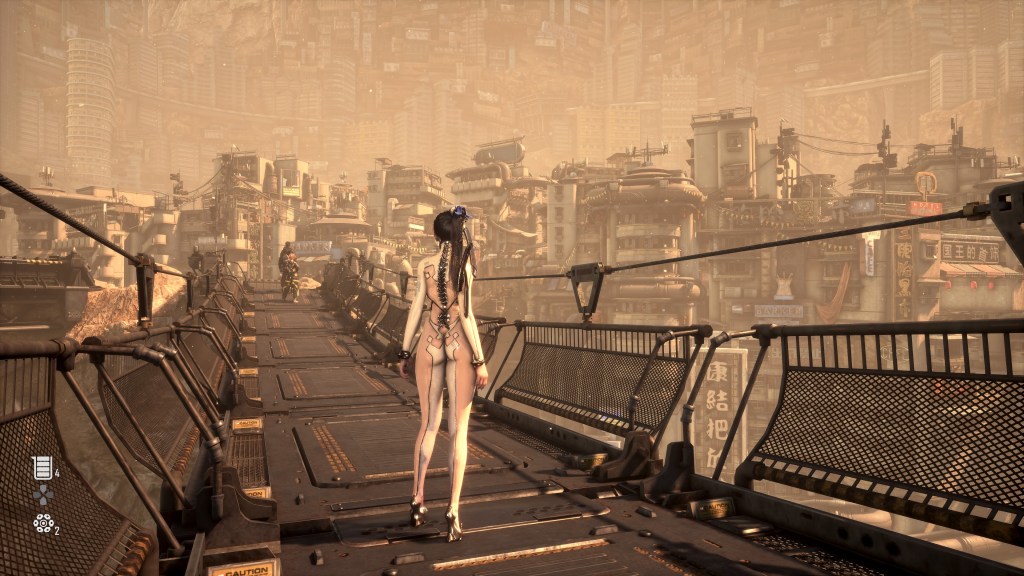
For the uninitiated, Stellar Blade was released on April 26th, on PlayStation 5. The game was published by Sony, backed by the full might of the PlayStation marketing machine, and developed by South Korean studio Shift Up. A company best known for their mobile gacha title, Goddess of Victory NIKKE, a cover shooter with a female-only cast of characters that prides itself on putting big, wobbly arses front and centre of the screen (yes, the developers have form). Players and critics seem to largely agree that Stellar Blade is a success, despite becoming a lightning rod for controversy since its announcement in 2021.
One particular flashpoint came after a GamesRadar interview with director Hyung-Tae Kim where he answered some questions about the design process. Kim confirmed that the team “put special attention” into designing Eve’s behind and that her overall look is simply a result of him wanting to see good-looking people in his entertainment. It raised a few eyebrows amongst the press, but most notably led to some particularly unhinged discourse as the “anti-woke” zealots, chastened by their decade-long pilgrimage through the puritanical dessert of progressivism (or something), saw Eve’s shiny green arse as some kind of holy artefact rightfully reclaimed and braced themselves to defend the game from anyone who would dare deprive them of it. A couple of weeks before launch, a tweet from the official Stellar Blade account proudly claiming that the game would be uncensored in all territories only deepened the crowd’s allegiance to the cause.
Then, on the day of release, Shift Up deployed a day one patch that, among other improvements to the game, removed a reference to a racial slur found in some in-game graffiti and made some minor adjustments to a handful of the skimpier unlockable outfits, ever so slightly upping the cloth-to-skin ratio. The “no-censorship” crowd responded in predictably delirious fashion, flooding social media with bizarre rants and whipping themselves up into a frenzy that resulted in the “Free Stellar Blade” petition, which at the time of writing has over 70,000 signatures demanding that the changes be reversed. (I swear, if you sign this thing, I’ll come find you.)
“Stellar Blade is a phenomenal new game that just launched on Playstation 5 worldwide. But it has a problem. The content has been censored from the original trailer version posted by Sony. We, as gamers, want this content back. We relied on it, we made the game the #1 pre-order worldwide because of it, and this is the true game we want.”
They were relying on it? Good grief, for what? Actually, don’t answer that. The “movement” also spawned this hilarious tweet, which simultaneously made my day, spoiled any remaining chance of me writing a “normal” review, and easily topped 2016’s “vagina bones” fiasco for cringe factor. It’s embarrassing for the developers, embarrassing for Sony, and, let’s be honest, embarrassing for humanity, whose extraordinary ability to continually lower the bar never ceases to amaze. All this nonsense kicked up enough of a stink that Kim responded, saying the team is aware of the issues and is discussing them internally. I don’t know where this is all heading, but I’d rather not think about the repercussions if the changes are reversed in a future patch.
The frustrating thing is that this uproar was all so predictable, and I think Sony and Shift Up only have themselves to blame. By leaning into the overt sexualisation of their main character and making “no censorship!” a key part of the marketing manifesto, this game was always going to attract a certain kind of audience. Their response to the outfit-altering patch was just as inevitable. It would be very unfair to ask developers and publishers to be held accountable for their audiences’ behaviour, of course. But if I, an untrained outsider (and idiot), could have seen this shitstorm coming, then surely the more experienced folks at Sony should have spotted this a mile off.
And perhaps they did—just a little too late. I swear I caught a whiff of preemptive damage control when, during the marketing cycle, they wheeled out Nier director Yoko Taro to simultaneously perform a Vic Reeves thigh rub while nodding his big, grinning head in approval of Stellar Blade’s jiggling jacksie. A cynical person might see this as an attempt to point the finger at Taro and remind us that we all loved the sexy android with her arse hanging out when he did it! I do have to wonder whether there was some minor internal panic after seeing the creepy fandom gathering around this game, and it seems likely to me that the day-one patch came as a result of pre-flight nerves ahead of launch from Sony’s more sensible heads.
And honestly, I wouldn’t blame them for having the jitters. Given the mass market appeal of their games and the influence they hold, Sony is responsible for ensuring that their products aren’t promoting outdated points of view or perpetuating harmful tropes. And as much as I hate to admit it, the “Free Stellar Blade” weirdos are right about one thing: games that are designed to cater to the male gaze this directly don’t really exist within the mainstream triple-A space any more. Look, I like Onechanbara as much as the next nerd, but let’s be real, we’re not going to see it featured in a State of Play. Most people don’t even know these games exist, let alone play them. We can downplay it all we like, but a game this high profile that treats its female characters as sex objects to be ogled is an anomaly in 2024.
Between Stellar Blade and Rise of the Ronin, it’s great to see Sony broadening its horizons and working with more Eastern developers again. I can certainly see the logic with the current state of the games industry in the West. (Hey, Sony, remember when you had your own studio for that?) But I can’t help feeling a little disheartened that the biggest player in the industry, with its first-party portfolio getting slimmer by the year, anointed a game that so gleefully reinforces the double standards of depictions of women in games as one of the few titles worthy of being elevated to the highest platform. Let’s imagine for a moment that Shift Up announces a sequel tomorrow with Sony’s full support. Only this time with a strapping male lead bouncing around, cock and balls visibly slapping about inside a pair of tighty whities like a flag on St. George’s Day. My God, can you imagine the chaos? It would be glorious, but it just wouldn’t happen. But, hey, Devolver, have I got a pitch for you! (Wait, Celestial Sword isn’t trademarked, is it?)
Look, there’s nothing wrong with designing a sexy main character, and there have been plenty of good articles from smarter and more qualified writers than me explaining why they think Eve’s design is actually fine and that it’s the way people are responding to it that is the real issue. I respect that opinion, and I do agree to an extent, but here, in this otherwise completely sexless game, there’s just something about Eve’s design that screams early graphic card box art in a way that I thought we’d moved on from. I’m not angry about this; honestly. But Like a weary parent, I am a little disappointed. (And maybe slightly nostalgic for old PC hardware; packaging is just so dull nowadays, isn’t it?)
We have plenty of examples of recent triple-A games that have done sexiness well. The FF7 remake duology and Baldurs Gate 3, for example, are horny as all hell without feeling gross or creepy. After the day-one patch censorship malarky, I’ve seen furious weirdos pointing towards these games and their rampant raunchiness and asking, “How come this is deemed acceptable, but Stellar Blade isn’t?” Well, my dudes (sorry, just assuming), in the case of BG3, it ain’t just boobs flapping about along the Sword Coast. And yes, there is titillation if you want it, but it’s the context in which it happens that makes the difference. It’s always opt-in and requires you to build relationships with these characters. Complicated, messy, relatable ones that can go spectacularly wrong depending on your decisions. In FF7 Rebirth, the bikini-clad beach scenes that briefly set the internet on fire are perfectly appropriate when viewed in context and are light-hearted, fun, and flirty skits with characters you’ve been getting to know for hours. In both cases, the games feature fully fleshed-out characters that players can build real connections with. With the demographic that Stellar Blade seems intent on courting, the only connection its creators seem to be encouraging from their audience is eyeballs to arse, and, I don’t know; I just think they could have aimed a little higher. Or at least slightly wider. Why not include a little something for everyone? I saw as many people lusting after Barret and Cloud as I did for Tifa after all, and Baldurs Gate’s Asterion and Gale as I did for Shadowheart.
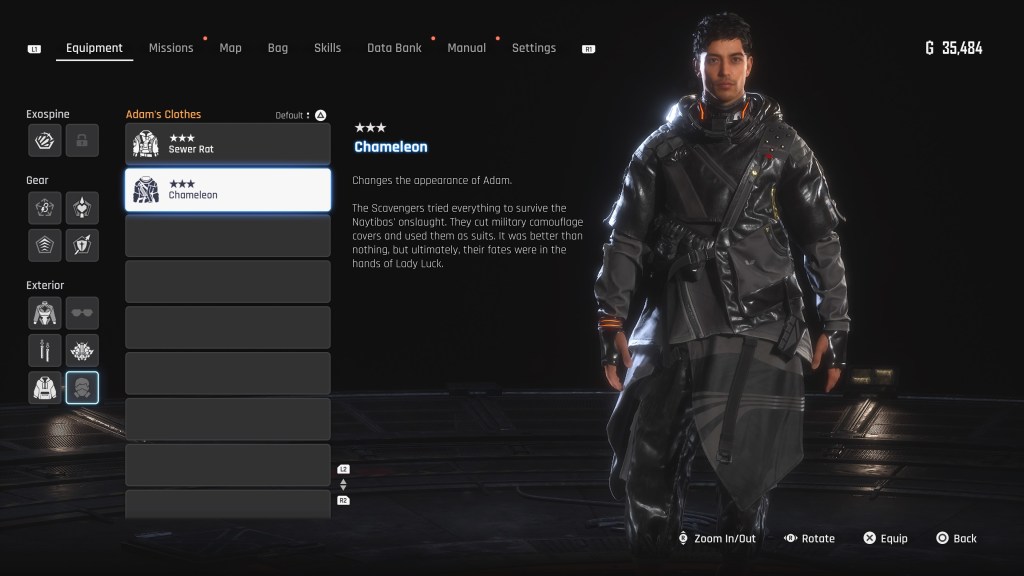
So, how does Stellar Blade treat its supporting cast of characters? Well, hilariously, all the men in Stellar Blade look a bit like Joey from that scene in Friends where he wears Chandler’s entire wardrobe. It’s as if Shift Up’s designers have stuffed them into at least three coats and two pairs of trousers to reassure concerned players nervously eyeing Baldur’s Gate’s swinging schlongs—don’t worry fellas, ain’t nothing slipping out on our watch. I laughed out loud when, some fifteen hours into the game, I finally unlocked companion character Adam’s second outfit, only for it to add yet another layer. At least all the men are as equally devoid of charm and personality as the women, which is one area where all the characters achieve parity. Anyway, if all of the above had raised one of my eyebrows, then the other one practically fell off when I saw the jiggle physics on Lily, who is, to my eye, a distinctly juvenile-looking character. Maybe it’s just me being prudish and cynical, but this whole game just feels icky in a way that I can’t quite shake.
I asked a real-life woman who lives in my house how she felt about the game, and about Eve as a character, after watching me play a chunk of it.
“On its own? It seems pretty harmless. We want to see games that cater to specific tastes. The issue is that we’re not in a place right now where funding is being dished out to other (particularly indie) developers serving other tastes. Especially first-party. All women have the right to choose how they feel about this game, though. Wanna play sexy, kick-ass Barbie dress-up? Go for it. But know where that character comes from. It might not be another woman giving you that empowerment, and their intentions might not be the same as yours. There’s a difference between being sexy and sexualised. She (Eve) doesn’t seem very sexy to me.”
And there we have it, folks. (I should have just handed her the keyboard to finish this article, really.) I also asked for her thoughts on seeing me play the game. I didn’t feel weird or awkward, personally (well, not any more so than usual), but did she have a different opinion? No, she couldn’t care less. She knows I’m a smart fella and will treat it with a critical eye. Though to be fair, the woman is my wife, whom I love and respect very much, and we’ve been together far too long to let some OTT jiggle physics cause any friction. Our relationship was forged in the fires of the early days of Team Ninja, for god’s sake! But, anecdotally, I do know some people who have been put off playing for fear of being shamed by an eye-rolling significant other.
The game does allow you some control over how much jiggling flesh you would like to expose, with some more modest, less skin-hugging costumes unlockable after a few hours of play. But why not give players this choice from the start? Hilariously, the only option the game does allow you to change from the off is the length of Eve’s ponytail, as if that’s the one thing players might want to moderate to play this at home without fear of judgement. Why can’t I change anything else? What about a wobble toggle? Why not add a butt and breast-size slider? Why not one per boob or butt cheek? Why not let me live out my one giant-arse-cheeked sci-fi warrior fantasy?
Ultimately, I think there were many ways in which this whole ordeal could have been avoided, but it seems like the people behind the scenes were perhaps paralysed by the same questions that are bouncing around the gaming media landscape and going largely unanswered. Nobody can seem to agree on whether there is even a problem here. And if there is a problem, then what exactly is it, and who is at fault? There are convincing arguments from smart people with takes that cover the full spectrum of opinion, and the only thing that feels definitive is the complete lack of consensus. As is often the case with complex issues like this, we’ll all need to make up our own minds.
As for my opinion on Stellar Blade, the more I think about it, the more it begins to feel a little less harmless given the slightly unsettling response, and it’s led to me viewing the game with a more critical eye. I really don’t want to be that guy, but it’s not just about the overt sexualisation of its protagonist. It’s the comments from the director. The censorship tweet. The social media drama. The Hard R incident. The team’s previous work. Chandler’s wardrobe. The bunny suit. It’s all of the above, plus the shiny arse and jiggly breasts.
In combination, it all just speaks to a particular attitude and worldview that makes me feel a little bit wary of Shift Up. I’m old enough to be cautious about jumping to conclusions and sensible enough to know that, even when controversy is swirling, there can often be smoke without fire. But when it comes to women’s issues in the games industry, another thing I’ve learned is that it’s prudent to ready the fire extinguisher.





Leave a Reply