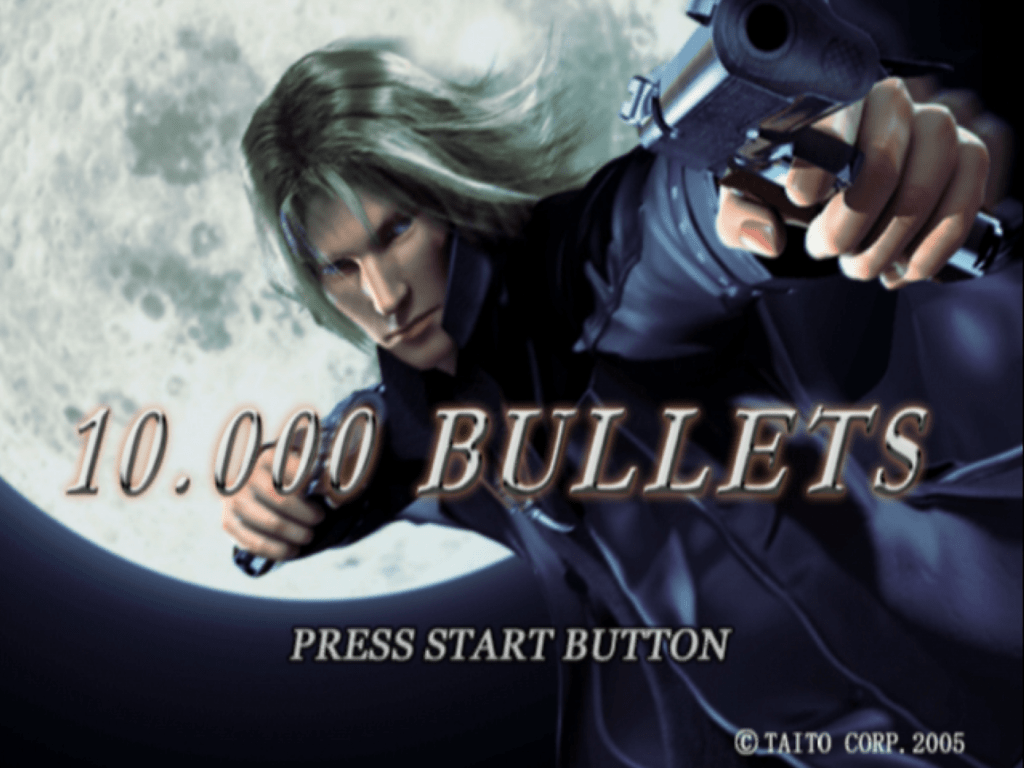
Like any video game obsessive, I have absolutely no respect for my own free time, so before starting this series of articles on PS2 character action games I watched all twelve hours of Virtual Gaming Library’s PlayStation 2 Project—a sprawling YouTube video that showcases all 4,218 games that were released for the system (and a right of passage for any hidden gem hunter)—and plucked out the coolest-looking stuff that fit the brief for the series: no mainstream hits, no critical darlings, and no well-established cult favourites.
It turns out that the games I picked had a lot more in common which, when looked at in the context of when they were released, helps to understand why they reviewed poorly and were overlooked by the audience. As well as the games I’ve written about here (Nightshade, Samurai Champloo, Samurai Western, and now, 10,000 Bullets), I also played Konami’s Nanobreaker and Koei’s Crimson Sea 2. Interestingly, all of them were from well-established teams of Japanese creators and released later in the PS2’s life cycle (2004 onwards), when the market was drifting away from Japanese-style action games towards big, expensive, cinematic, narrative-driven experiences that were mainly the preserve of Western studios.
They all had a (seemingly) fairly low budget, a short run-time, and a focus on challenging arcade-style action gameplay, with any pretensions of narrative ambition very firmly playing second fiddle. They all feature per-level performance rating systems that will inevitably humiliate you at first blush, suggesting they were built with replay in mind and that one playthrough is perhaps not enough to mine their mechanical depths—a bad fit for time-strapped critics.
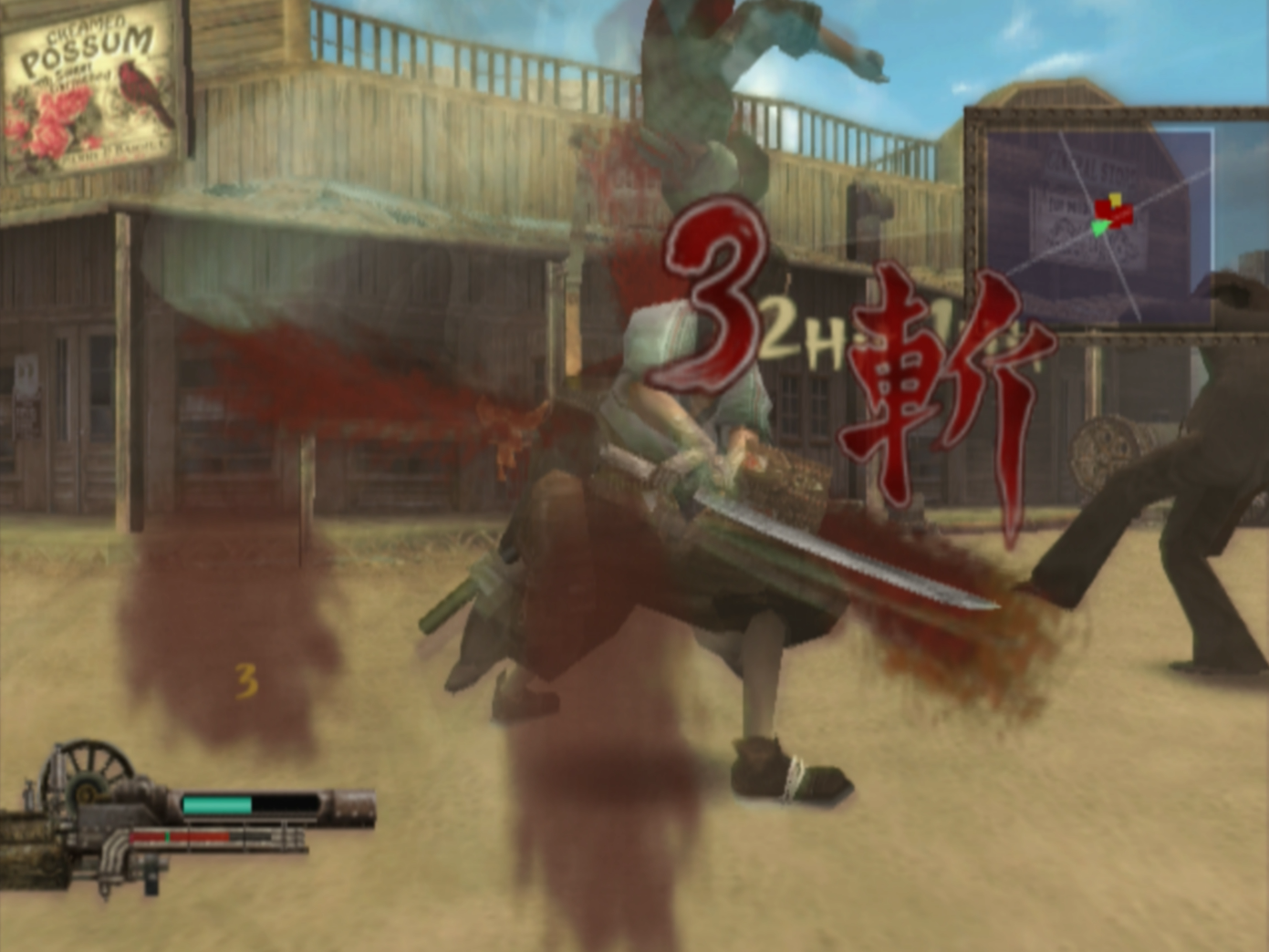
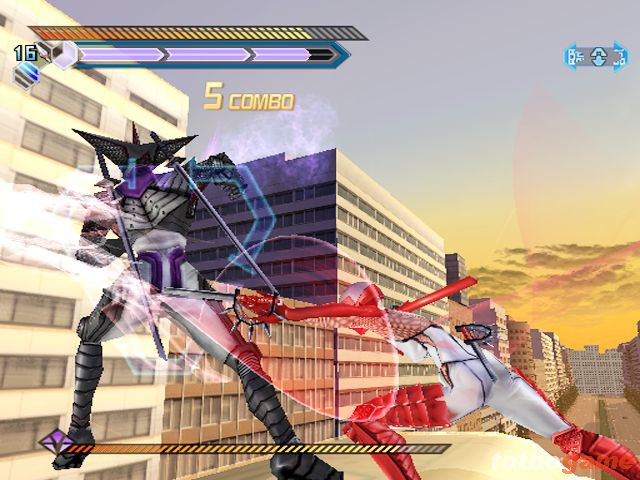
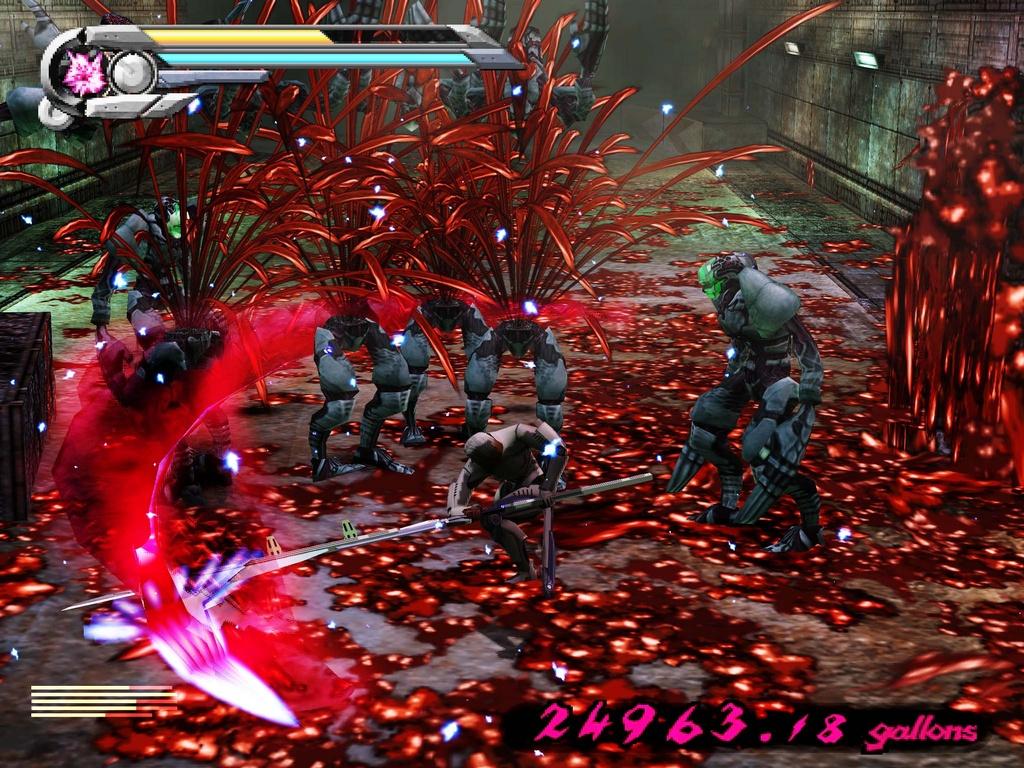
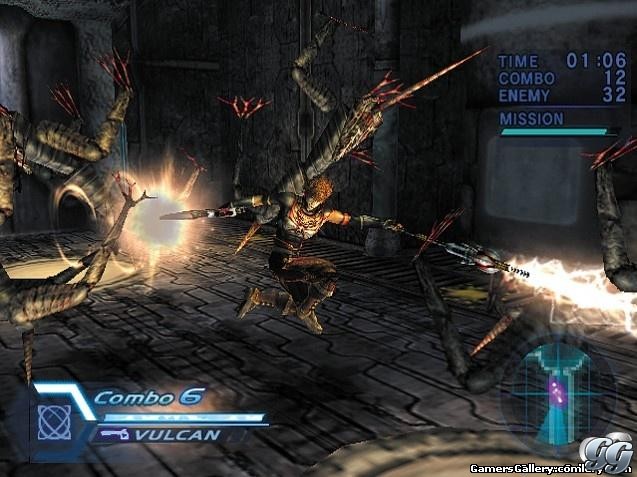
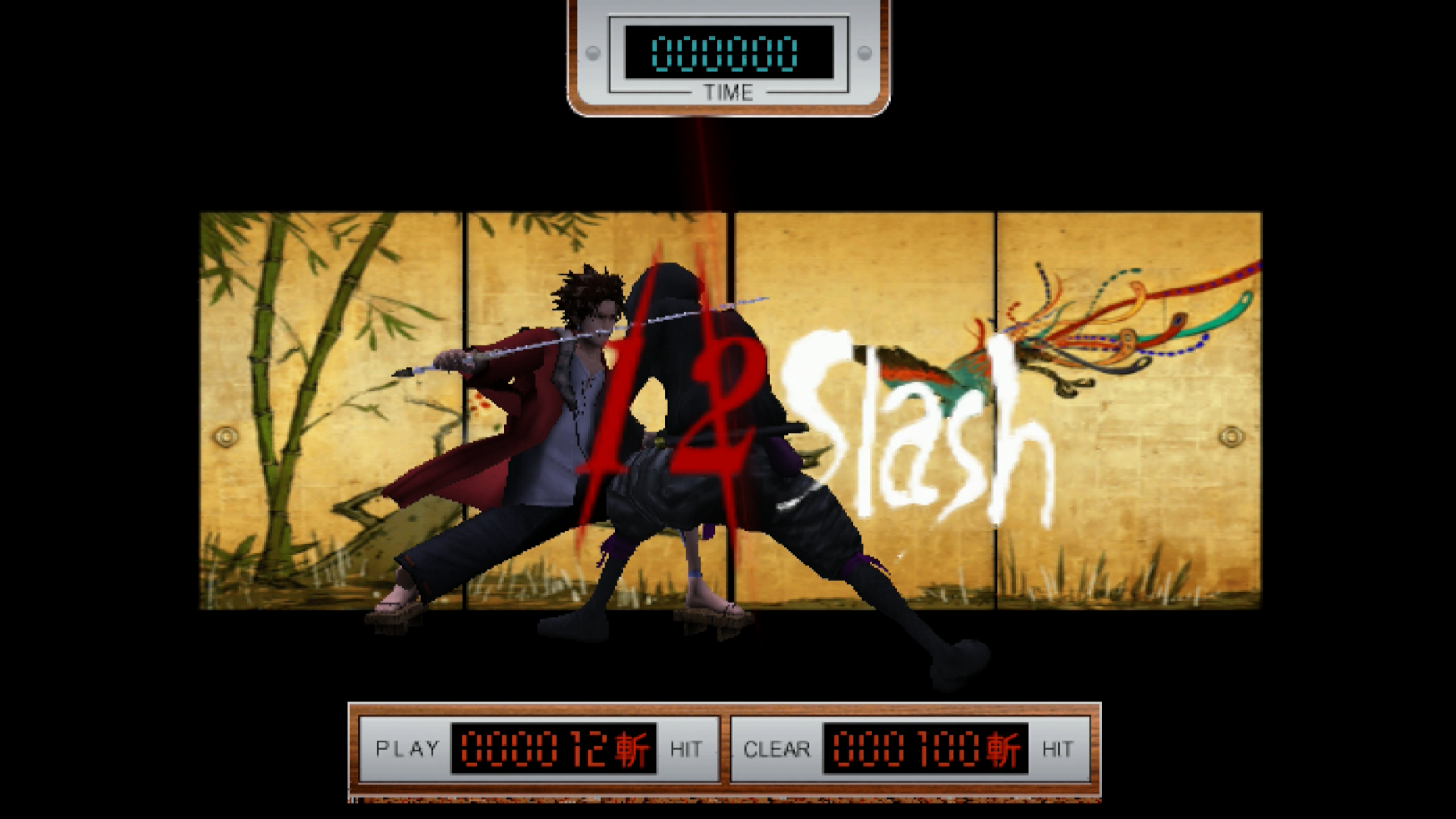
The odds were stacked against them then, and a common sentiment from critics at the time was to describe them as “mindless fun” or a “guilty pleasure”—as if a game without aspirations beyond providing a satisfying play experience was somehow less deserving of praise, and only really worthy of being enjoyed ironically. What has surprised me, is just how much fun I’ve had with these “bad” games. No guilt, no irony—these are just great games that, for one reason or another, didn’t fit the mould of what critics and players were looking for at the time. Every single one of them excels in some way, and in the case of Samurai Western and Nightshade, I’ve found two titles I now count among the best action games on the system.
Which brings me to 10,000 Bullets, a game that I’d never heard of despite regular deep dives down countless retro gaming rabbit holes. It’s a 2005 JP and EU-only release from Blue Moon Studios, directed by the brilliant Yoshitaka Murayam, the creator of the Suikoden series (who very sadly passed away in February this year). The game has no Metacritic page, and the only contemporaneous review I could find was a whopping 2/10 from Official PlayStation 2 Magazine. They called it a “disjointed mess” and a “gaming travesty”, which sounded right up my alley, so I stuck it on the list. I’m so glad I did.
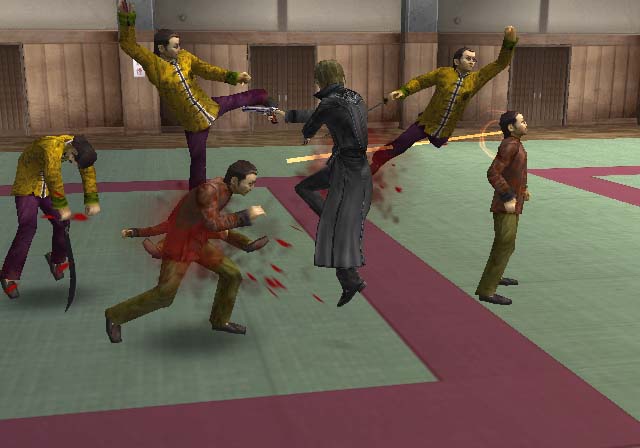
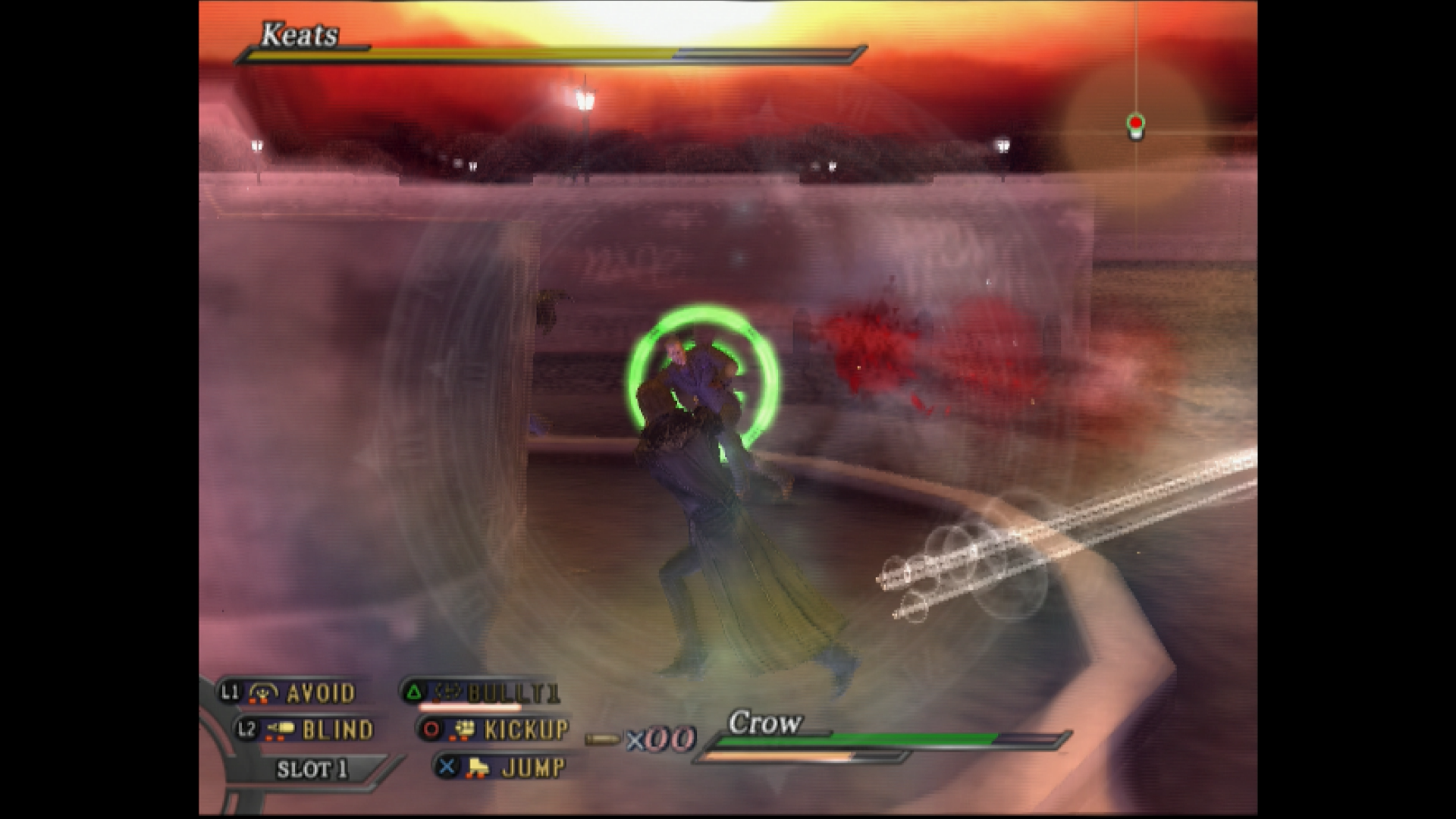
10,000 Bullets borrows a lot from the character action classics of the era—a linear progression of locked combat rooms, a combo counter, level gradings, all that good stuff—and then shamelessly rips off Max Payne’s bullet time mechanic wholesale and steals its leather trench coats and dudes in suits aesthetic from The Matrix. Rather than full third-person shooter-style analogue controls, it uses a lock-on system and timing-based shooting with a focus on one-hit kills. 90% of the game is played in slow motion, where every bullet is a fully simulated physical object that can be dodged or sometimes shot out of the air. Dash moves, triple jumps, and a host of offensive and defensive special moves increase your ability to both avoid fire and deal damage in combat arenas swarming with enemies. It’s a real bullet ballet (remember that phrase?) that becomes immensely fun once you’ve got the hang of it.
Every trigger pull is a potential one-hit kill, provided your timing is on point. You can mash the trigger as fast as you want; rapid shots will increase your combo counter, which restores your energy metre, but you have to be close or your bullets will miss. If you wait for your lock-on cursor to flash red, however, you’ll score a critical hit—these are harder to combo but do more damage, always hit, and will instantly kill most enemies. It’s a great system that makes every encounter a careful balancing act of scoring criticals to thin enemy numbers while racking up enough rapid-fire combos to charge your bullet-time energy supply.
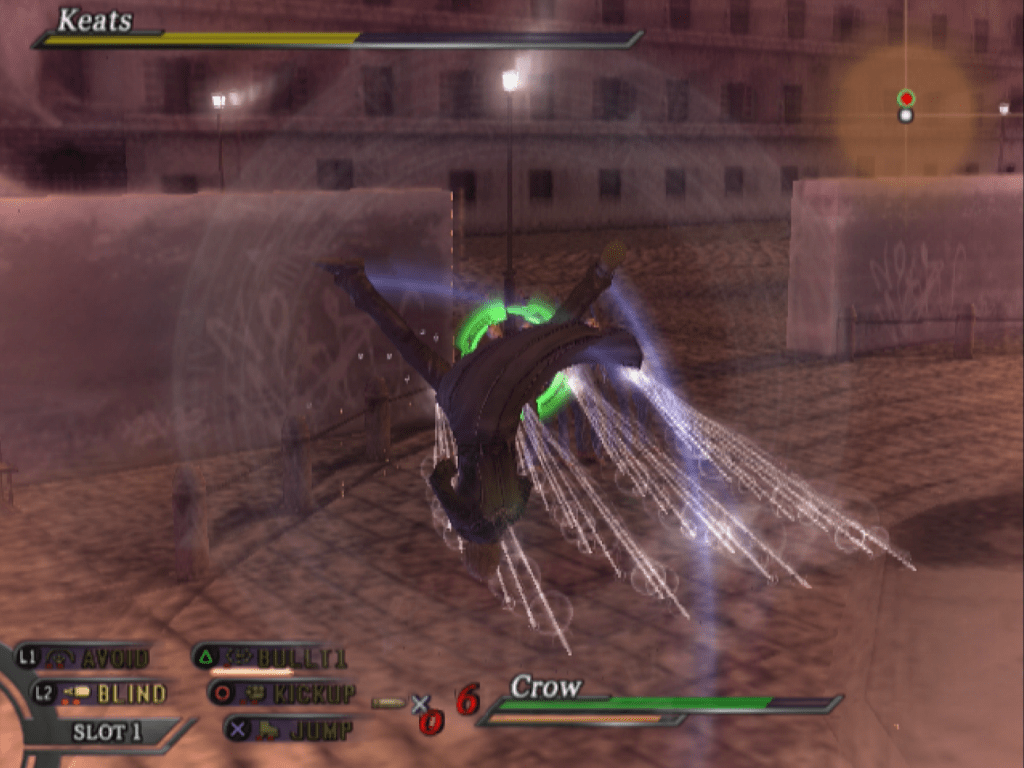
Where I imagine it loses most people is that the target selection is inconsistent, and switching past your intended mark means having to cycle through all available targets to get back there, with the slightly unhinged camera wildly swinging about. It’s not an issue when you’re facing two or three enemies, but ten? Twenty? It means that you rarely feel fully in control of who or what you’re targeting, but if you stop fighting it and go with the flow, it lends each encounter a manic spontaneity, forcing split-second decisions while reacting to whatever the game decides to throw at you. It’s an experience quite unlike anything else, and it almost gives the game the feel of an arcade lightgun shooter at times. I can’t imagine that this was intentional, more of a happy accident, but learning to compensate for this “flaw” was an enjoyable part of the learning curve that is utterly unique to this game.
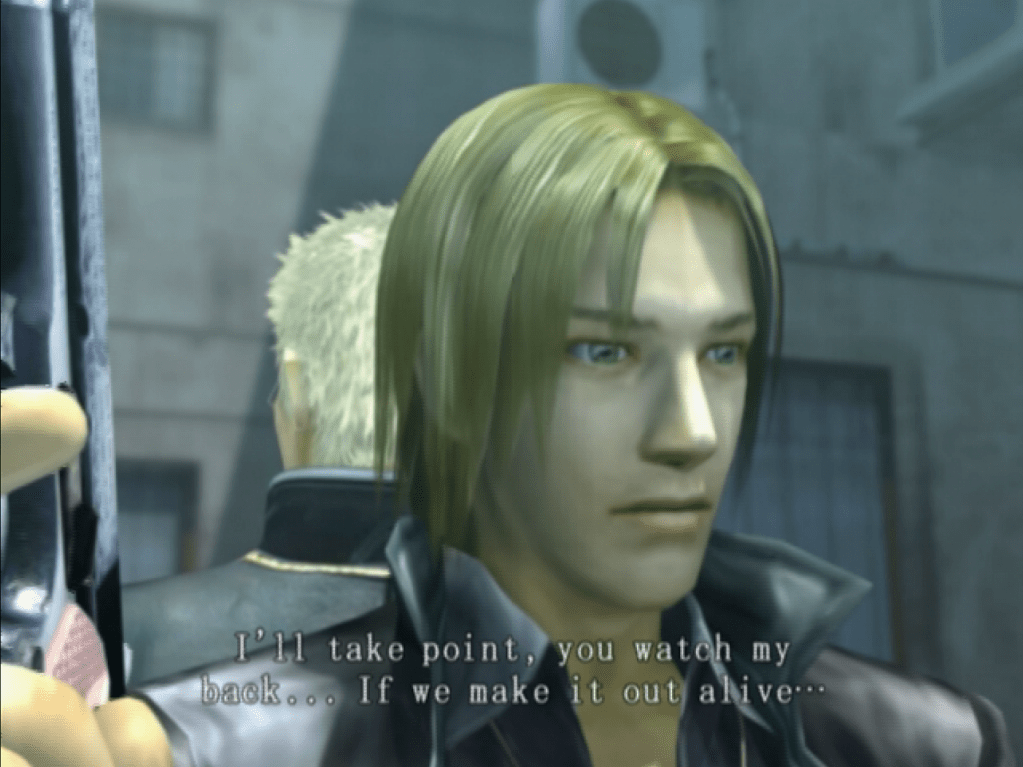
I won’t try to defend the bland environments; outside of a memorable nightclub stage, all are equally forgettable. They’re boxy, barely textured things, but honestly, if you’re admiring the scenery, you’re already dead. This is not an easy game, and the lack of visual clutter keeps the frantic action nicely readable—handy when you’re dodging bullets—and the visual spectacle of its flashy, acrobatic gunplay is more than enough to keep your eyes busy.
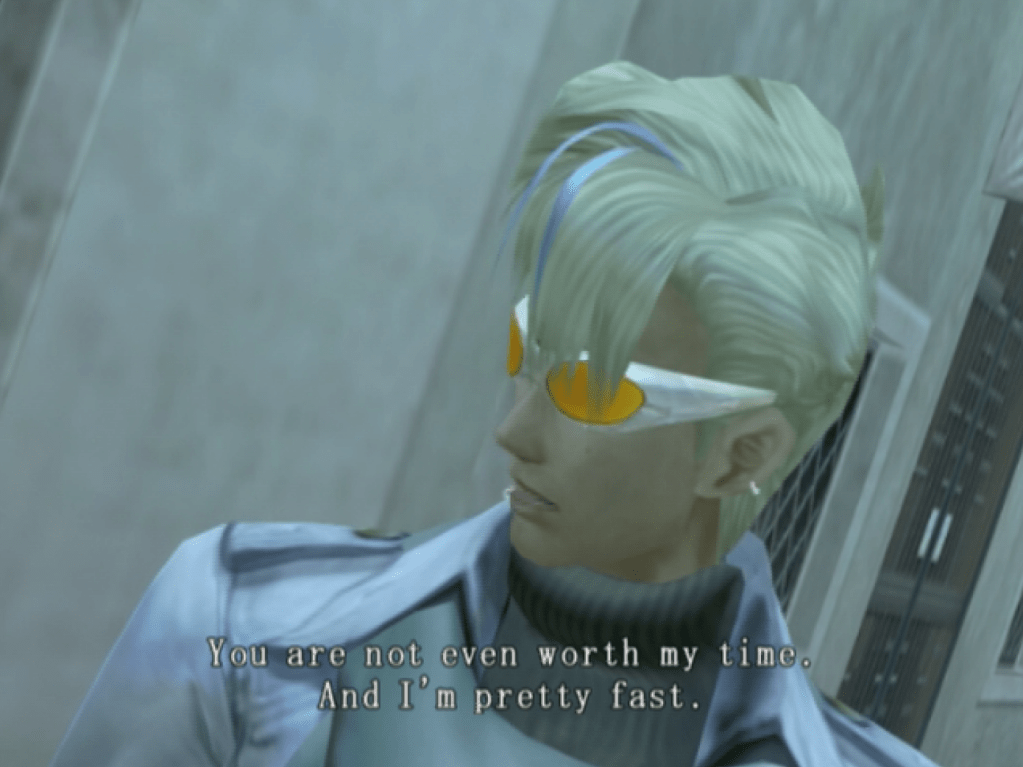
Between missions, the story plays out through a mixture of poorly written visual novel sections and some hilariously hammy CGI cutscenes. It’s something of a genre trope for these games to lean into their often campy, OTT presentation with a knowing self-awareness, but there’s no such consideration here. The plot is 100% self-serious, pseudo-philosophical, macho-posturing nonsense. It is genuinely terrible. And I love it. Your mileage will vary, but I find the way it presents itself so earnestly just incredibly endearing.
One unexpected highlight is the acid jazz and bebop-inspired soundtrack—a strange juxtaposition with its visual style, but one that further feeds into this game’s unique patchwork feel and injects some real personality into the presentation. It’s also just really damn good, which is no surprise at all if you check the credits. There are two names: the legendary Yasunori Mitsuda (Chrono Trigger) and Konami veteran Miki Higashino (Gradius). I literally cannot think of a better musical dream team.
A quote from Siliconera on the wiki page describes 10,000 Bullets as a cheap imitation of more successful games, with a faulty camera, bland environments, a tedious story, and an ill-fitting musical score. You know what? All true. But it doesn’t tell the whole story—it’s a game that remains brilliant fun despite its many flaws, and in some cases because of them. It has a wonderfully scrappy, hand-made feel, and sometimes it adds a certain something when you can see a game’s seams and feel the rough edges, reminding you that you’re playing something made by people and not the product of some faceless machine.
A forgotten classic, then? No, not quite. It’s not even close to being the best game on this list of oddities. But more than all the others, it typifies exactly what I love so much about the PS2’s library, and more specifically, this particular brand of uniquely Japanese action game that was so plentiful in this era before losing the favour of players and critics and all but disappearing in the next console generation.
It’s a reminder of why it’s so important to me to keep digging into the libraries of these old consoles—there is no modern equivalent to this kind of experience; the market doesn’t allow for it any more. Game development is too complicated, too expensive, and too risk-averse, and the unreasonable consumer demand for cutting-edge tech and an endless churn of content prevents games like this from taking the first step outside of a designer’s hypothetical thought bubble. And what a shame that is! Because while 10,000 Bullets might be cheap, messy, flawed, and janky as all hell, it was also the most fun I’ve had with a game in ages. And really, what more do you want?



 Analogue Noise
Leave a comment