It might sound absurd, but Nintendo is a genre-killer. Sometimes, they will make something so good that, outside of their own sequels, other developers noodling around with similar concepts might stop and think, well, what’s the point? The blinding success and sheer quality of the 3D Mario games all but killed the big-budget 3D platformer, and when was the last time you saw a non-Nintendo kart racer light the charts on fire, let alone sell seventy million copies? In 2002, they effectively created a new genre and killed it off in one decisive blow with Metroid Prime, but this one has always struck me as a little baffling. Despite universal acclaim and the proliferation of 2D metroidvania titles flooding the market, why has this brilliant 3D conversion of the formula had so few imitators? Could it be that this game arrived so perfectly formed that it just… put developers off? Does iterating on its design feel pointless to the extent that nobody has even bothered to try? Or could it be that making a fully 3D action game that combines non-linear exploration, platforming, light puzzle solving, first-person shooting, and spectacle-filled boss fights is just, you know, really bloody difficult?
Whatever the reason, thank goodness for indies and hobbyists who, unlike the increasingly risk-averse triple-A space, are ambitious enough to have a crack at it. And there’s nothing quite like being slapped in the face with the unchecked ambition of a solo developer making their first commercial game. Developer Ben Jungwirth has been toiling away for years creating Frogmonster, a metroidvania first-person shooter that was released on Steam in April. The game appears to take inspiration not only from Retro Studios’ classic, but also from more recent descendants of Nintendo’s iconic series like Hollow Knight, “movement shooters” like Doom Eternal, and yes, From Software’s influential Soulsborne titles with the design of its challenging boss encounters.
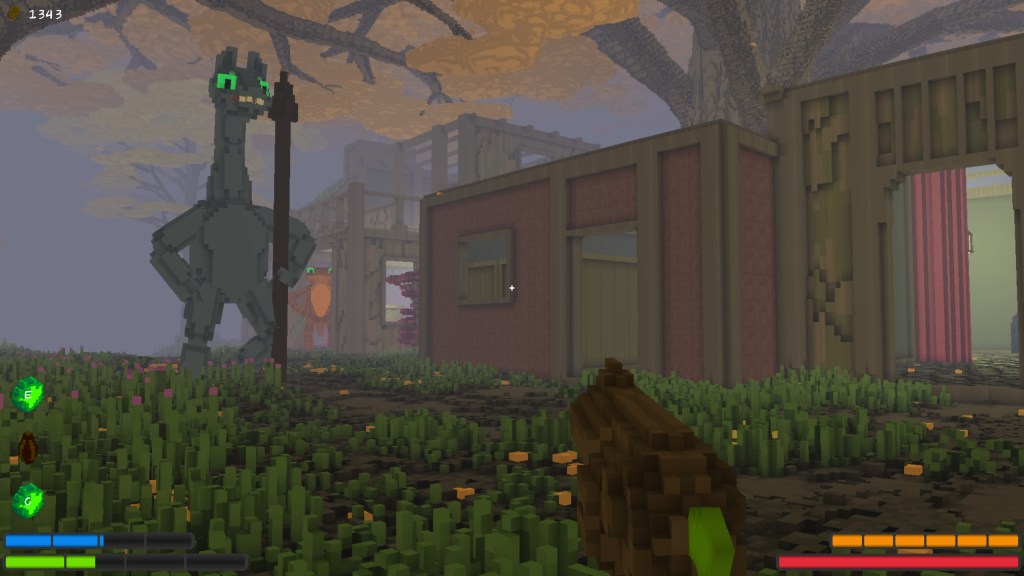
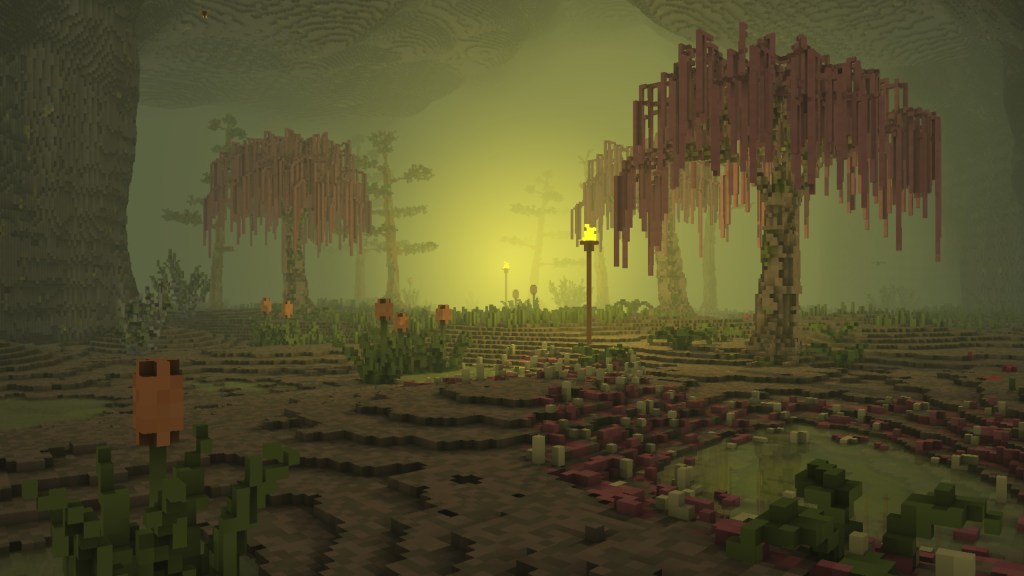
There is a lot to love about Frogmonster, enough that I could fill this page many times over. I could write about how its hyper-detailed voxel-based visuals (think Minecraft, if every cube was small enough to fit in your pocket) blend with real-time lighting and post-processing effects to somehow create a simultaneously cosy but often foreboding, high-fidelity but low-tech, turbo-charged PS1-era vibe. I could take you on a long, lazy virtual tour of its many and varied environments, enthusing about how its ever-expanding world gradually unfolds around you as you climb the metroid-style upgrade ladder. I could heap praise upon its movement physics that perfectly capture the slightly slippery, bouncy feel I want from a playable character who is a literal frog, or how the ingenious way the deployable tongue (only ever a right-click away) is utilised for distinctly froggy things like slurping up bugs (for temporary buffs and Hollow Knight-style charm effects), and distinctly Metroid-y things like doubling as your unlockable grappling hook. I could impress you with the game’s sheer size and generosity, and with how, just when you think you’re approaching the finale, the game comes alive and yields yet another layer, offering up its best set of levels with bespoke, game-changing gimmicks.
I could talk about all of that. But I want to talk about Marvin. A massive mushroom monster with a shit-eating grin, Marvin is the second of Frogmonsters’ wonderfully creative boss encounters, and the first time I realised that, in the spirit of the games that inspired it, holy moly, this game does not mess around. Let me walk you through it.

Phase one. When the fight begins, Marvin burrows underground, popping up randomly throughout the battle to unleash one of three moves: Firstly, a dangerous ring of projectiles that fans out across the field of play and damages you on contact. Secondly, floating spores, which he hurls into the air that spawn enemy creatures on contact with the ground. And thirdly, what I can best describe as a mouth-hoover that sucks you towards him—a real problem if you’ve failed to clear the other enemies swarming the arena. It’s a claustrophobic and challenging fight, requiring you to bounce around avoiding enemies while watching out for Marvin and trying to deal with his deadly repertoire, all while dealing enough damage with your severely limited early-game arsenal before your own health bar is whittled away to nothing.
Through repeated failed attempts, however, you begin to learn. Each of Marvin’s attacks has a specific tell that gives you a moment to prepare a counter. You quickly learn that his projectiles can be dodged with a simple, well-timed jump, neutering his primary attack. The spores he releases don’t spawn enemies if you gun them down before they hit the dirt—now it’s just you and him. Then, you discover his hoover-like mouth is a weak spot that, when shot, stops his attack dead and deals double damage—now you can really hurt him. Before long, you get the fight down like clockwork and drop Marvin before you’ve lost a slither of health. Who’s the boss now, Marvin? Then, just as you begin to celebrate, Marvin comes back for more.
Phase two. Marvin rises up once again, only this time he’s the size of a building, stretching out to fill your field of view. He begins spinning around with his massive arms outstretched, forcing you into a deadly game of jump rope while taking potshots at his stupid grinning face as it whirls past your line of sight again and again, his speed and trajectory growing more erratic as you dish out damage. Finally, and with a cheeky, knowing wink, Marvin unleashes a poisonous purple mist that blankets the ground and rapidly starts rising, forcing you to platform your way up scattered toadstools, higher and higher, desperately trying to keep yourself safe long enough to frantically unleash your remaining payload and finally finish him off. Like I said up top, absolute bastard. And I love him for it.
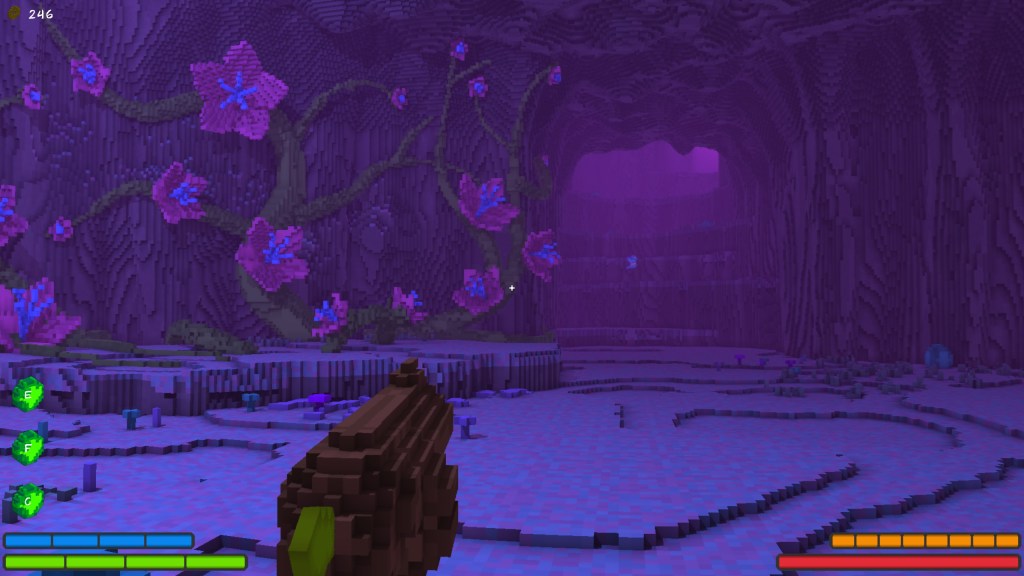
The battle with Marvin is, to put it mildly, a lot. It’s not the most difficult fight, but it is the most unexpectedly mechanically complex combat encounter I’ve played in recent memory, requiring the kind of simultaneous tummy-rubbing, head-patting coordination that a game might ask of you after spending hours mastering its full vocabulary of controls, systems, and mechanics. The fact that this encounter happens thirty minutes into the game is, frankly, ridiculous. But it’s also brilliant, and I love the way that it escalates with all the, “…this happened, and then THIS happened!” runaway enthusiasm of a young child excitedly motor-mouthing a tall tale to a classmate. The developer’s comments on Twitter confirm that this was a dream game for him, and his wide-eyed passion absolutely shines through in moments like this.
You could argue that someone should have been there to tap him on the shoulder and say, “Don’t you think this is, you know, a little bit much?” And if this game were the product of a larger team, they almost certainly would have. But it wasn’t. And therein lies the beauty of playing indie projects like this from small teams, or in this case, solo developers—even someone like me who has been playing games for decades, who’s seen it all and done it all many, many times over, can still be surprised and delighted in a way that I almost never am with more mainstream or triple-A titles. Even the best ones. It’s why I think it’s so important not to ignore these games, even when we are swimming in an ocean of high-quality mega-budget blockbusters or triple-I (urgh) indies like we are in 2024.
Frogmonster is a game built from rough edges, so don’t go in expecting Hollow Knight levels of polish; you won’t find it here. But what you will find is a game packed with ideas and absolutely bags of heart. And after those first thirty minutes, you’ll learn to look past the flaws when every hour spent in this world is charged with the possibility of another Marvin. Oh, did I forget to mention? Marvin is just one of Frogmonster’s twenty-eight boss encounters. And he just barely scrapes the top ten.
Frogmonster is available now on Steam.
Want more like this?
Here are three similar (and similarly brilliant games) from solo developers to check out if you enjoy Frogmonster.
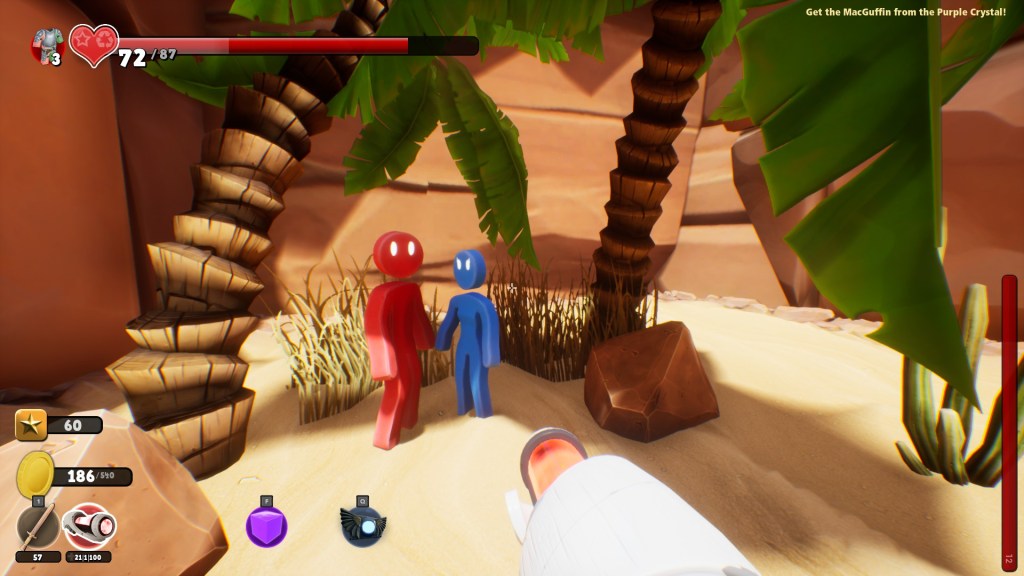
Supraland: A first-person metroidvania puzzle game that aims to combine Zelda, Metroid, and Portal and somehow pulls it off. A wonderful game you can pick up for pennies.
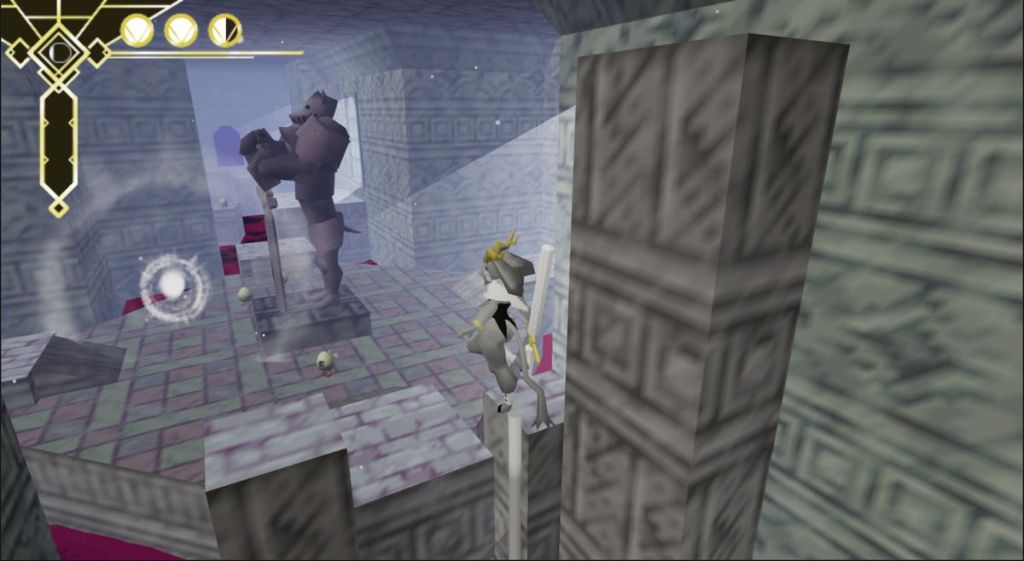
Pseudoregalia: A 2023 sleeper-hit that offers absolutely best-in-class 3D platforming and classic, metroidvania-style exploration. Essential.
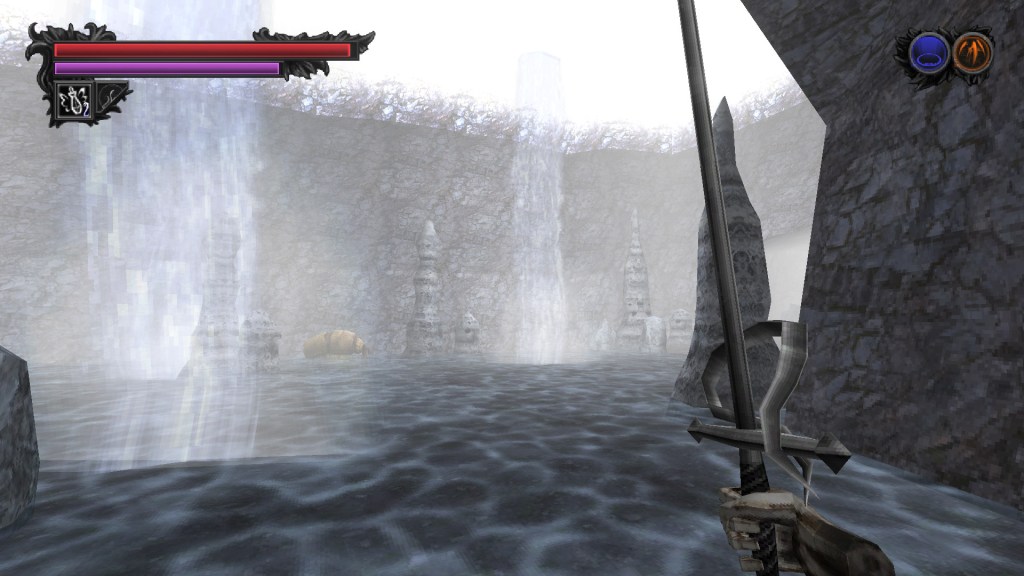
Lunacid: This King’s Field inspired first-person dungeon crawler packed with variety and impeccable vibes might scratch an itch you didn’t know you had.



 Analogue Noise
Leave a comment